
How to Clean Decking and What a Professional Clean Costs
TopRatedWindowCleaners.co.uk · 7 October 2026
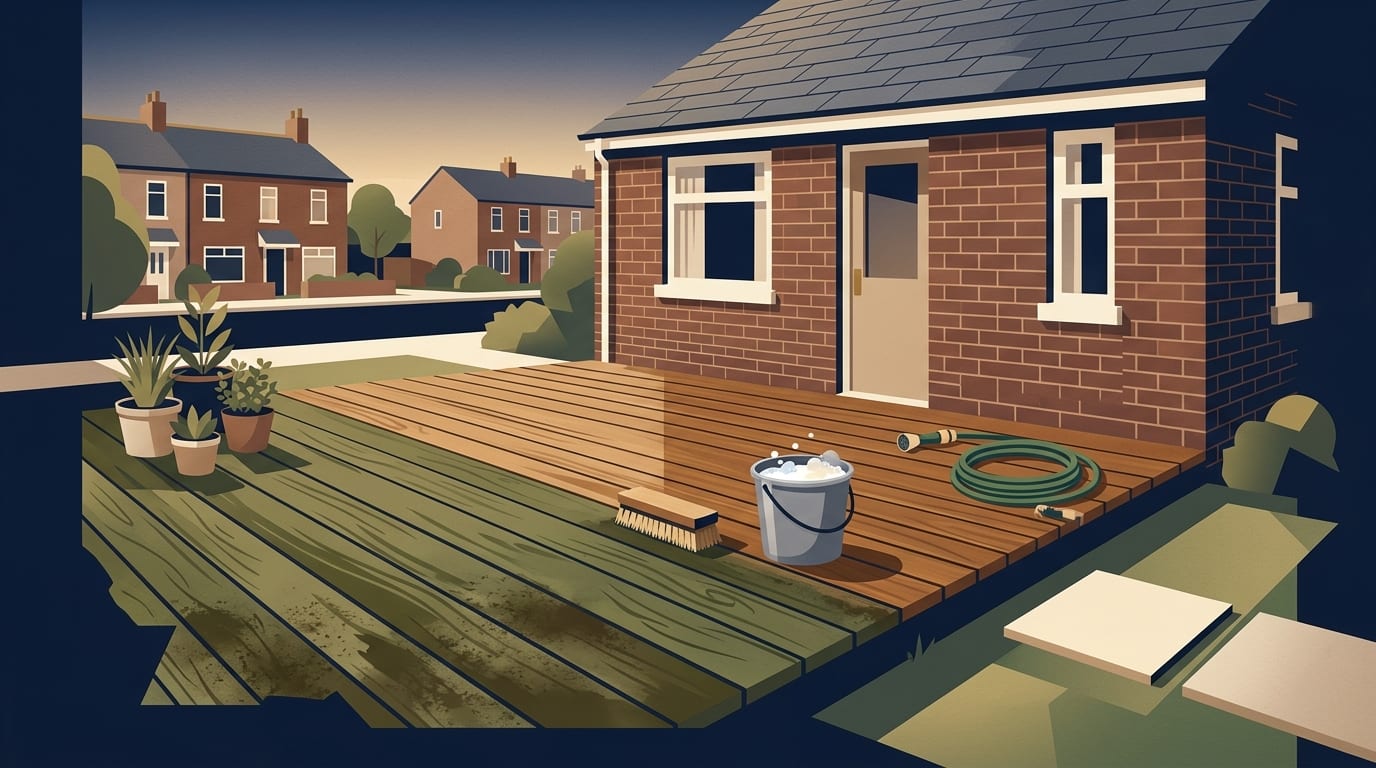
Regular sweeping and a scrub with a mild soap solution handle most decks, whether they are built from timber or composite boards. A pressure washer is only safe at low pressure with the lance kept well back from the surface to avoid gouging the material. If you decide to hire a professional, a deck clean typically costs from about £30 for a small deck to £180 or more for a very large one outside London in 2026, with staining or oiling charged as an extra.
Why decking gets green and slippery
According to the Royal Horticultural Society, algae, lichens, liverworts and mosses do not damage the hard surfaces they grow on. They simply make surfaces such as patios, drives, paths, decking and steps slippery, so they should be controlled where people might slip and fall.
Slippery decks are usually caused by a build up of these surface deposits, particularly mildew, algae and fine mosses. Algae thrive in wet conditions and grow much faster in shady areas with poor air circulation. You will often see a heavy build up of green growth on your decking after a wet winter.
Non-chemical methods work well to control this growth, so there is no need to buy moss killers or chemical patio cleaners. Brushing your decking regularly with a stiff broom removes the growth and helps stop it taking hold in the first place. Pruning back any overhanging plants to let in sun and air, and improving drainage at the edges so water flows away, will both help deter the growth from returning.
Timber and composite need different care
The type of boards you have dictates how you should clean them. Soft timbers and older, weathered boards need a far gentler touch to avoid furring or gouging the surface. Hardwood decking and composite decking are more forgiving, but they still require the right approach to avoid permanent damage.
First generation composite boards have reclaimed wood fibres at the surface. These uncapped boards need regular cleaning to stop algae, mould and mildew building up in the wood fibres. Capped composite boards have a thin protective plastic layer that resists moisture and staining, but they can still grow algae on the surface if they are left damp and dirty.
Many composite decking manufacturers provide performance warranties when the decking is installed and maintained according to their instructions. The installer should hand over the care and maintenance instructions when the deck is built. Following the manufacturer care instructions is important because your warranty can depend on it.
How to clean timber decking
The Timber Decking and Cladding Association advises that regular maintenance does not have to be onerous. Sweeping a deck with a stiff brush should be enough in its early years, combined with an occasional clean.
To clean a timber deck by hand, choose a dry day. Sweep the deck thoroughly with a stiff brush to remove loose dirt and leaves. Scrub the boards with a scrubbing brush and a mild soap solution to lift the surface deposits. Rinse the boards well with clean water to wash away the soap and the lifted dirt.
You must let the timber deck dry completely before you apply any further treatment, such as oil or stain. If you are not used to cleaning decking, or you have a very large area to cover, you may want to hire an expert to do the work for you.
How to clean composite decking
Composite decking needs much less maintenance than timber, which requires regular cleaning and treatment. A simple hose down often keeps composite boards clean, but the surface can still become slippery when wet and requires a proper wash to remove algae and dirt.
For a basic clean, start by moving all your furniture and planters off the deck. Sweep off leaves and debris, because debris left on the boards traps moisture and leads to mould. Scrub the boards with a soft bristle brush and lukewarm water mixed with a little ammonia-free washing-up liquid. Hose the deck down thoroughly to finish. Make sure that water runs off the deck rather than pooling in the middle.
Rinsing thoroughly is important because dirty water left to dry leaves a film on the decking. If pollen and dirt stay on the surface for a long time, mould can feed on them and spread across the boards.
Never use chlorine bleach on composite boards. Bleach permanently fades the colour of composite decking, corrodes the metal clips and fixings beneath the boards, and is ineffective against mould on composite materials. You should also protect your decking from cement, concrete and mortar dust during any building work, because this dust reacts with the surface and is very difficult to remove once it settles.
Using a pressure washer without damage
A pressure washer removes green growth quickly, but you must use it with care, especially where drainage is poor. Bear in mind that a pressure washer uses a lot of water for a temporary result, because the growth will return if the damp and shady conditions stay the same. You should always wear goggles to protect your eyes from flying debris.
The timber surface can be damaged, bruised or splintered if the water pressure is too high. Choose a lower pressure setting and do not put the lance too close to the surface. Too much pressure, or holding the lance too close, will splinter and gouge soft timber.
If you use a pressure washer on composite decking, use a spray setting rather than a concentrated jet. Do not use high pressure, and keep the nozzle well back from the boards. If you also need to clear algae from stone or concrete pathways, read our guide on patio jet washing costs to see how paving requires a different approach.
How much a professional deck clean costs
A professional deck clean usually covers pressure washing the surface, removing algae, moss, dirt and grime, clearing loose debris and a full rinse down. Charged separately are tasks such as sanding or repairing damaged boards, deep moss or mould treatment for badly neglected decks, clearing heavy furniture, and cleaning a nearby patio.
The table below shows how prices change based on the size of the deck and where you live in the UK.
|
Deck size |
Rest of the UK |
London and the South East |
|---|---|---|
|
Small (up to 20 m²) |
£30 to £50 |
£40 to £80 |
|
Medium (20 to 40 m²) |
£60 to £90 |
£80 to £110 |
|
Large (40 to 60 m²) |
£90 to £120 |
£110 to £140 |
|
Extra large (over 60 m²) |
£120 to £180 or more |
£140 to £200 or more |
These figures are typical published prices for 2026, and local quotes will differ depending on the condition of your boards. Professional deck cleaning costs around £5 per square metre on average.
Many pressure washing firms set a minimum call-out charge of about £145 for a standalone visit, which means a very small deck will cost more per square metre if booked on its own. Pressure washing firms typically quote £80 to £280 to clean a 10 to 20 square metre deck, which works out at about £8 to £14 per square metre and takes two to five hours to complete.
You will usually find the lowest prices when the deck clean is added to a patio or driveway clean, or when it is part of a regular garden visit. A gardener adding a quick deck wash to a regular visit may charge from £30 to £50 for a small area. You can read more about combining these jobs in our guide to exterior cleaning services.
Certain factors push the price up. Raised decks, decks with lots of balustrades and spindles, and decks that can only be reached by walking through the house take longer to clean and will cost more.
Oiling, staining and other extras
Treating your timber straight after a clean, while the wood is fresh and free of dirt, gives the best and longest lasting result. Softwood decking that faces the weather benefits from oiling every year or two. A sheltered timber deck needs treating far less often, and composite decking does not need oiling or staining at all.
If you ask a professional to treat the wood, expect to pay extra on top of the cleaning price. Light sanding or preparation typically costs £50 to £150. Staining, oiling or sealing the timber typically costs £350 to £800.
How often to clean decking
Cleaning once a year suits most UK decks, ideally in spring to clear winter algae or in autumn to clear fallen leaves before the wet weather sets in. Shaded, damp or north facing decks may need cleaning twice a year to keep the moss and slime at bay.
Sheltered decks and composite decks need washing less often, provided you maintain them properly between washes. Regular sweeping is the best way to extend the time between deep cleans, as it stops dirt breaking down and trapping moisture against the boards.
What to ask before you book
Asking the right questions helps you compare quotes fairly and ensures the cleaner knows exactly what you expect them to do.
- Ask if the quote is for a clean only, or for a clean and treat.
- Ask what cleaning method and water pressure they will use on your specific boards.
- Tell them if the deck is composite, and ask if they will follow the maker's care instructions.
- Ask if their quote includes a minimum call-out charge.
- Agree who is responsible for moving heavy garden furniture and planters before the work starts.
- Ask to see their current public liability insurance certificate.
- Ask to see before and after photos of similar decks they have cleaned.
- Ask for a written quote that confirms the final fixed price.
Your rights and the rules on run-off
A professional cleaner must manage the dirty water safely. According to government pollution prevention guidance for England, any substance not found naturally in an environment could cause pollution, including the detergents used to wash decking. Surface water drains discharge directly to the environment. A business must make sure contaminated water goes into the foul drain with the water company's permission, is recycled, or is removed by a registered waste carrier. Causing pollution can bring an unlimited fine.
Under the Consumer Rights Act 2015, a trader must do the work with reasonable care and skill. Citizens Advice states that if they have not met this standard, you can ask them to put it right. If they cannot or will not fix the problem, you can ask for a partial or full refund. You should take photos of any damage or poor work as evidence. Once a refund amount is agreed, it should be paid to you within 14 days.
You also have a 14-day cooling-off period if you change your mind. Citizens Advice explains that a service arranged online, by phone or by mail order carries this 14-day cancellation right. The same rule applies to a service agreed when the business approached you away from its premises, such as on your doorstep, provided the cost is £42 or more. The cooling-off period starts the day after the contract is made. If you asked for the cleaning to start within that period, the business can keep or charge for what they provided before you cancelled.
Common questions
Can you use a pressure washer on composite decking?
You can use a pressure washer on composite decking, but only on a spray setting and not on high pressure. You must keep the nozzle well back from the surface. Rinsing thoroughly is essential so dirty water does not dry into a film.
How do you clean composite decking?
Sweep the boards to remove leaves and debris, then scrub the deck with a soft bristle brush, lukewarm water and a little ammonia-free washing-up liquid. Hose the deck down thoroughly to rinse away the dirty water. Never use chlorine bleach, as it permanently fades the boards and corrodes the metal fixings.
What is the best way to clean timber decking?
Regular sweeping with a stiff brush stops dirt and leaves trapping moisture. For a full clean, pick a dry day, scrub the boards with a scrubbing brush and a mild soap solution, and rinse well with clean water. You must let the timber dry completely before you apply oil or stain.
Is a decking cleaning service worth the money?
Hiring a service is often worth the cost if you have a very large deck, lack the right equipment, or need an old deck sanded and oiled. A professional clean typically costs from about £30 for a small deck to £180 or more for a very large one outside London.
Next steps
If you decide to hire a professional to clean your decking, take these steps to ensure a smooth process.
- Check what material your decking is made from, and find the manufacturer care guide if it is composite.
- Clear any fragile items, pots and light furniture off the deck yourself to save time.
- Ask three local exterior cleaning or pressure washing firms for a quote.
- Check their public liability insurance and read their recent customer reviews.
- Get the final price in writing, confirming exactly what is included.
Comparing quotes from reliable local firms helps you find a fair price, so take a moment to find a window cleaner near you who also offers deck and patio washing services.
Related Guides

How to Remove Sticker Residue and Glue From Glass
How to get stickers, labels, tape and glue off window glass without scratching it, which tools to avoid on toughened glass and when to ask a professional.

Brick and Stone Cleaning Methods and What to Avoid
How brick and stone walls are cleaned, why the wrong method causes lasting damage, what a wall clean costs in 2026 and when you may need consent first.

How to Remove Water Marks and Hard Water Stains From Glass
Why white spots and limescale marks form on window glass, how to remove them without damage, when marks mean the glass is etched and how to stop them coming back.