
Patio Jet Washing Costs and How to Protect Your Paving
TopRatedWindowCleaners.co.uk · 7 October 2026
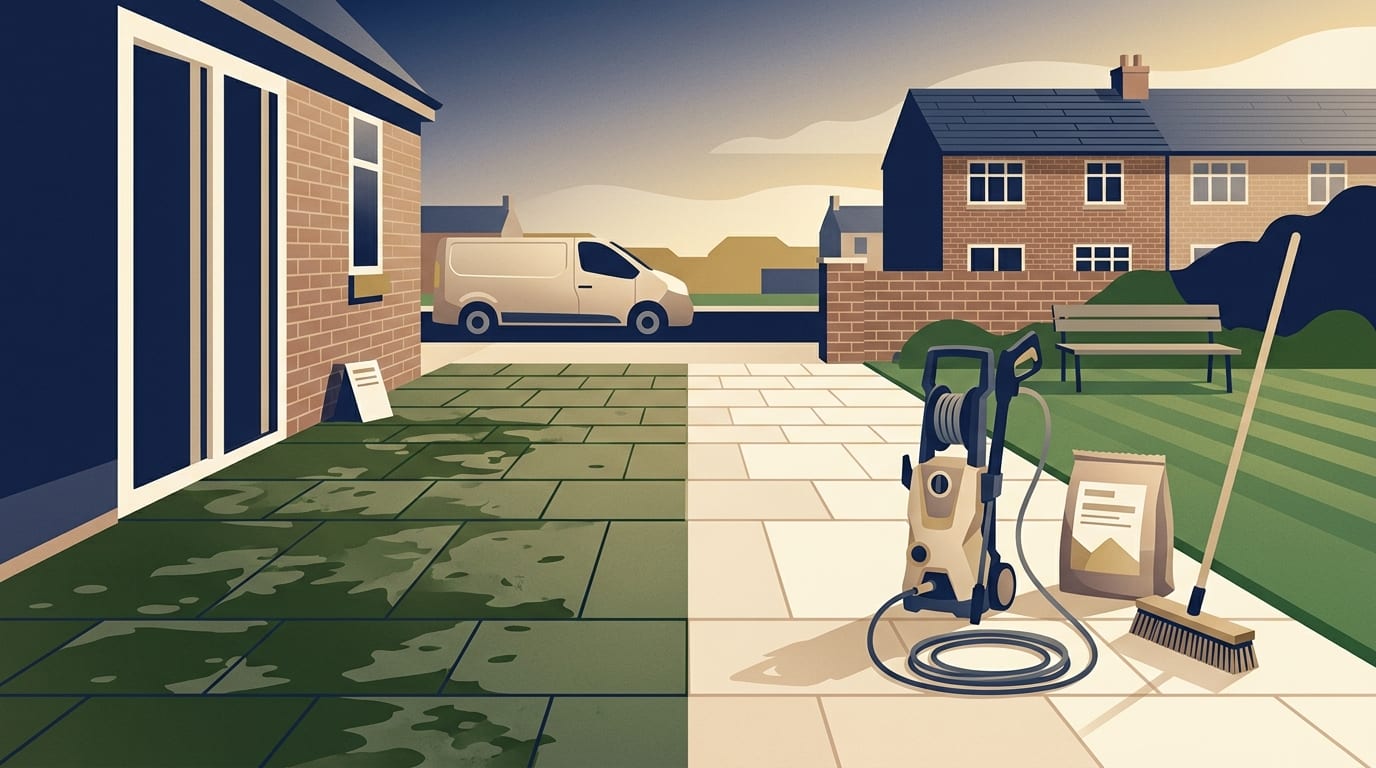
A typical medium patio costs roughly £120 to £180 to clean outside London, while a professional clean for most patios ranges from £90 to £400 in total. Jet washing blasts away dirt, moss and slippery algae, leaving the paving safer to walk on. The exact price you pay depends on the size of the area, the type of surface you have and whether you choose to pay for re-sanding or sealing afterwards.
What a professional patio clean involves
A professional patio clean goes well beyond simply spraying water at the paving. The work is usually done by jet washing, which is also known in the trade as pressure washing. The biggest thing that moves the price beyond the size of the area is how ingrained the dirt is. A professional will assess the surface first to decide how much pressure is needed and what preparation the paving requires.
If the paving has heavy moss, thick weeds in the joints and years of accumulated black grime, the job takes much longer. The cleaner will need to apply a suitable pre-treatment, spend time weeding the worst areas first, and make several careful passes with the jet washing equipment to lift the dirt evenly.
As a rough guide, a small patio usually takes two to three hours to complete. A medium patio takes four to six hours, and a large patio takes seven to nine hours from start to finish.
How much patio jet washing costs
Patio cleaning is usually priced by the square metre, but the final bill depends heavily on the overall size of the space and where you live in the UK. Most exterior cleaning firms apply a minimum call-out charge of around £80 to £120. This means that even if you have a very small courtyard or a tiny paved seating area, you will still pay this minimum amount.
The table below shows typical prices based on the size of the patio.
|
Patio size |
Rest of the UK |
London and the South East |
|---|---|---|
|
Small up to 20 m² |
£80 to £120 |
£100 to £150 |
|
Medium 20 to 40 m² |
£120 to £180 |
£160 to £220 |
|
Large 40 to 60 m² |
£180 to £270 |
£240 to £320 |
|
Extra large over 60 m² |
From £270 |
From £340 |
These figures are typical published prices for 2026, and local quotes will differ. Small patios cost the minimum charge of around £80 to £120 whatever their exact size.
Prices for concrete, block paving and natural stone
When a firm quotes for the work, they will look closely at the material your patio is made from. Different paving surfaces require different cleaning approaches and take varying amounts of time to wash safely. Concrete slabs are usually the cheapest surface to clean, while block paving costs slightly more per square metre.
Natural stone is the most expensive standard surface to clean. If you have extra paths and walkways leading up to the patio, cleaning these usually costs around £100 to £180 on top. In London and the South East, rates are often around £4 to £5 per square metre for standard surfaces.
The table below shows typical per square metre rates for different paving materials, along with the cost of optional extras.
|
Surface or add-on |
Price per square metre |
|---|---|
|
Concrete slabs |
£2 to £4.50 per m² |
|
Block paving |
£2.50 to £5.25 per m² |
|
Natural stone such as sandstone, limestone or granite |
£5 to £8 per m² |
|
Re-sanding joints or sealing as an add-on |
£5 to £9 per m² |
These figures are typical published prices for 2026, and local quotes will differ.
Why natural stone costs more to clean
If your patio is made from natural stone such as sandstone, limestone or granite, you will pay more for a professional clean. Natural stone costs between £5 and £8 per square metre to wash, compared to £2 to £4.50 for standard concrete slabs. This price difference comes down to how the material reacts to high pressure water.
Natural stone is softer and more porous than manufactured concrete. If a cleaner uses standard high pressure on a sandstone slab, the water can easily mark or damage the surface. To clean delicate natural stone safely, the operator must use much lower pressure and take a lot more care.
Working at a lower pressure means the job takes longer to finish. This extra time on site, combined with the specialist care required to protect the stone, pushes the price up. A good operator always matches the pressure carefully to the surface they are working on.
Block paving joints and sealing
Block paving requires a specific cleaning process because of the way the blocks are laid. Jet washing blasts out the kiln-dried sand that sits between the blocks. This sand helps keep the paving stable.
A good job always includes re-sanding the joints afterwards. Brushing fresh kiln-dried sand back into the joints restores the stability of the paving and helps to slow down weed regrowth. You should always confirm whether re-sanding is included when you get a quote for block paving. If you are also having a driveway cleaned at the same time, you can read more in our guide to cleaning block paving driveways.
Sealing any surface is an optional extra that costs £5 to £9 per square metre. A sealant provides a protective layer over the paving. This makes the finish last longer and makes the patio much easier to keep clean in the future. Sealing also helps the paving resist weeds and unsightly stains.
What goes wrong with a careless jet wash
Jet washing looks simple, but careless work can leave a poor finish. An operator working freehand often leaves stripes and zebra patterns across the paving where their passes overlap unevenly.
Using too much pressure is another common mistake. Too much pressure marks soft stone and blasts jointing sand everywhere. A good operator matches the pressure to the type of paving you have.
Run off and drains
Washing a patio creates a large volume of dirty water. This run-off must be managed carefully, especially if the cleaner uses any detergents or pre-treatments. According to government pollution prevention guidance for England, any substance not found naturally in an environment could cause pollution, and detergents fall directly into this category.
Surface water drains are designed for rainwater and discharge directly into the environment. A business must make sure that contaminated water from its activities does not go into these drains. Instead, dirty water must go into the foul drain with the water company's permission, be recycled, or be removed by a registered waste carrier. Causing pollution can bring an unlimited fine, so a careful firm will have a clear plan for keeping dirty water and detergent out of surface water drains.
When doing it yourself makes sense
Cleaning the patio yourself is a perfectly reasonable choice for a small concrete patio. If you do not already own the equipment, hiring a pressure washer costs £30 to £200. Doing the work yourself saves money on labour, but there are practical limits and environmental factors to consider before you start.
The Royal Horticultural Society points out that pressure washing is a temporary fix that uses a lot of water. Growth will return if the conditions on your patio stay the same. If you do decide to use a pressure washer, you must use it with great care where drainage is poor, and you should always wear goggles to protect your eyes from flying debris.
For large patios, delicate natural stone or an even sealed finish, hiring a professional makes much more sense. A professional is faster and more consistent across a large area.
How often to clean a patio
For most patios, a thorough clean once a year is enough. The ideal time is either in spring to clear away winter algae, or in autumn before the wet weather sets in. Shaded, damp or heavily used patios may benefit from twice yearly cleaning to keep them safe and looking their best.
According to the Royal Horticultural Society, algae, lichens, liverworts and mosses do not actually damage the hard surfaces they grow on. However, they can make patios, paths, decking and steps very slippery, so they should be controlled where people might slip and fall. Algae thrive in wet conditions and grow much faster in shady areas with poor air circulation. They often build up rapidly after wet winters.
You can keep growth down between professional cleans by brushing the paving regularly with a stiff broom. Pruning overhanging plants to let in sun and air, and improving drainage at the edges, also help deter regrowth. Non-chemical methods work perfectly well, so there is no need for mosskillers or chemical patio cleaners.
Questions to ask before you book
Before you agree to a patio clean, you need to know exactly what you are paying for and what protections you have in place. Asking a few plain questions helps you separate a careful professional from a careless operator.
Make sure you ask the cleaning firm these questions:
- What is your price per square metre and what is your minimum charge?
- Is re-sanding included in the quote if I have block paving?
- Is sealing included or is that an extra cost?
- How will you adjust the pressure for my specific surface?
- Are you fully insured for this type of work?
- Can you show me before and after photos or customer reviews?
- Will you provide a written quote that states the surface and everything included?
You have strong legal rights when you hire a tradesperson. Under the Consumer Rights Act 2015, a trader must do the work with reasonable care and skill. If they have not, you can ask them to put it right. If they cannot or will not fix the problem, you can ask for a partial or full refund. You should take photos as evidence of the poor work. Once a refund amount is agreed, it should be paid within 14 days.
You also have a 14-day cooling-off period for a service arranged online, by phone or by mail order. This right also applies to a service agreed when the business approached you away from its premises, for example on the doorstep, as long as it costs £42 or more. The cooling-off period starts the day after the contract is made. If you asked for the service to start within that period, the business can keep or charge for what was provided before you cancelled.
Common questions
How to clean a patio without a pressure washer
You can clean a patio effectively without a pressure washer by relying on regular physical maintenance. Brushing the paving regularly with a stiff broom removes algae and moss and helps stop them taking hold. Improving drainage and cutting back overhanging plants to let sunlight reach the stone will also stop green growth from returning so quickly.
Does patio cleaning remove all weeds?
Not always. Weeds in the joints usually need weeding or pre-treatment before the wash, and they can grow back. On block paving, having the joints re-sanded once the paving is dry helps to slow weed regrowth.
Can you jet wash block paving?
You can jet wash block paving, but the high pressure water blasts out the kiln-dried sand that sits between the individual blocks. This sand keeps the blocks stable and stops them moving underfoot. If you jet wash block paving, you must always re-sand the joints once the surface is completely dry.
Is sealing a patio worth the money?
Sealing a patio is an optional extra that costs roughly £5 to £9 per square metre. It provides a tough protective layer that helps the paving resist weeds and stains. Sealing makes the finish last longer and makes the patio easier to keep clean, but ask the firm whether sealing suits your paving before you pay for it.
Next steps
Before you hire a patio cleaning service, make sure you know exactly what your paving needs and what the quote covers. Following a few simple steps will help you get a fair price and a good result. If you also have wooden boards that need attention in the garden, you can read our guide to decking cleaning for prices and methods.
- Measure your patio roughly in square metres so you can spot an overpriced quote immediately.
- Check whether your patio is made of concrete, block paving or natural stone.
- Ask the cleaner to confirm in writing if re-sanding and sealing are included.
- Check that the firm holds a current certificate for public liability insurance.
- Ask exactly how they plan to manage the dirty water run-off.
Taking the time to check these details protects your paving from damage and ensures you only pay for the work you agreed. When you are ready to get quotes, you can use our directory to find a window cleaner near you who also offers professional exterior cleaning services.
Related Guides

Driveway and Block Paving Cleaning Costs Explained
What driveway and block paving cleaning costs in the UK in 2026, what a proper job includes from pre-treatment to re-sanding and sealing, and how to avoid damage.
Render Cleaning Costs and Why Soft Washing Is Safer
What render cleaning costs in the UK in 2026, why soft washing is safer than a jet wash on most renders, what a proper clean involves and how long it lasts.
Solar Panel Cleaning Costs and Whether Your Panels Need It
What solar panel cleaning costs in the UK in 2026, whether rain is enough to keep panels clean, and what a professional clean should include.